Birds of the Ozarks
Welcome to the Birds of the Ozarks
The Ozarks are home to a rich variety of bird species, many of which visit our feeders throughout the year. Some stop by daily, others appear only in certain seasons, and a few surprise us when we least expect it.
This page highlights some of the birds you’re most likely to see on our live cameras — along with a little information about who they are, how they behave, and what makes each one special.
Everything you see on our cams is live and unscripted — just real birds living their lives in the Missouri Ozarks.
Common Visitors
Birds you’re most likely to see on our live cameras
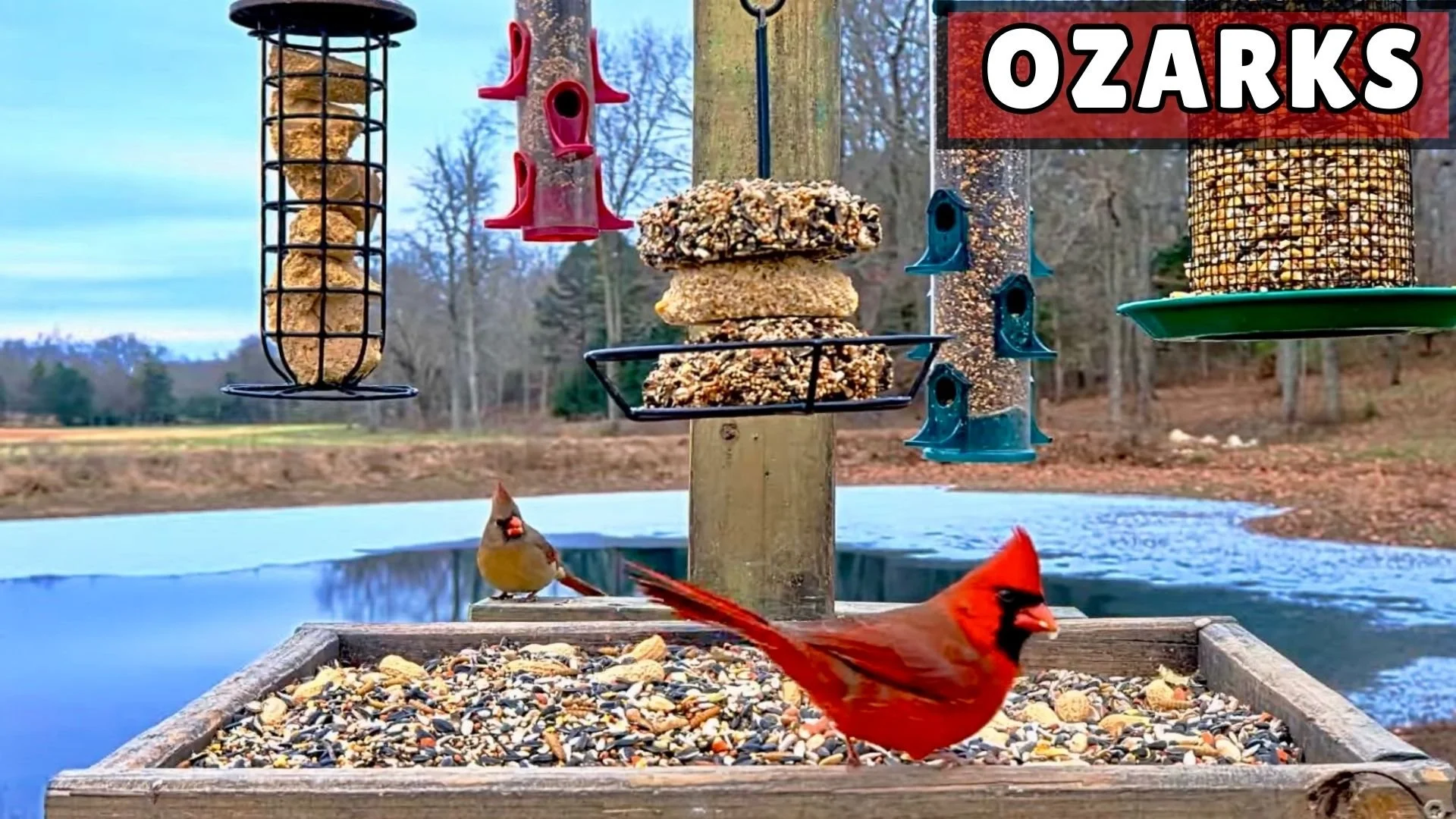
Northern Cardinal
Bright red males. Soft brown females. Hard to miss.
Northern Cardinals are one of the most recognizable birds in the Ozarks and frequent visitors to our feeders year-round. Males are known for their vivid red coloring, while females wear warm brown tones with hints of red.
Cardinals are non-migratory and often appear in pairs. Their clear, whistling songs are a familiar sound around the farm, especially in the early morning.
You’ll often see them:
At seed feeders, on branches nearby, or hopping along the ground.
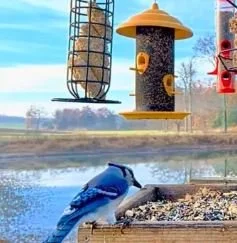
Blue Jay
Bold, intelligent, and always vocal.
Blue Jays are striking birds with blue, white, and black markings and a strong personality to match. Known for their loud calls and curious nature, they’re often the first to announce themselves when they arrive.
Blue Jays are highly intelligent and have been observed mimicking hawk calls — possibly to scare off competitors.
You’ll often see them:
Grabbing seeds quickly, caching food, or watching from nearby trees.
Mourning Dove
Gentle, calm, and peaceful.
Mourning Doves are soft gray-brown birds with a quiet presence and a soothing, cooing call. They tend to feed on the ground and are often seen in pairs or small groups.
Their calm behavior and steady movements make them a favorite for viewers who enjoy quiet moments on the cam.
You’ll often see them:
On the ground beneath feeders or resting along fence lines.
American Goldfinch
Small, bright, and full of energy.
During warmer months, male American Goldfinches display brilliant yellow feathers with black accents. In winter, their colors become more muted, but their energetic behavior stays the same.
Goldfinches prefer smaller seeds and are often seen fluttering in and out of feeders.
You’ll often see them:
In quick bursts at feeders, especially in spring and summer.
Woodpeckers
Strong, focused, and fascinating to watch.
Several species of woodpeckers visit our feeders, including Downy and Red-bellied Woodpeckers. They use their strong beaks to peck at suet and seed, often clinging vertically to feeders or tree trunks.
Woodpeckers play an important role in forest ecosystems by controlling insect populations.
You’ll often see them:
Clinging to suet feeders or tree trunks nearby.
Seasonal & Occasional Visitors
Depending on the time of year, you may also spot:
Chickadees
Nuthatches
Sparrows
Wrens
Orioles (seasonal)
Hawks passing through
The mix changes with the seasons, weather, and migration patterns — which is part of what makes watching so rewarding.
Every bird has its own personality, habits, and rhythm. Some return daily at the same time, while others appear only once in a while. Watching them over time helps you notice these small differences — and appreciate the beauty of everyday nature.
We’ll continue adding new birds to this page as they visit the farm. If you spot a bird you don’t recognize, feel free to reach out — we love learning alongside our viewers.